

aeterneA
an interfaith Brahms Requiem for all people
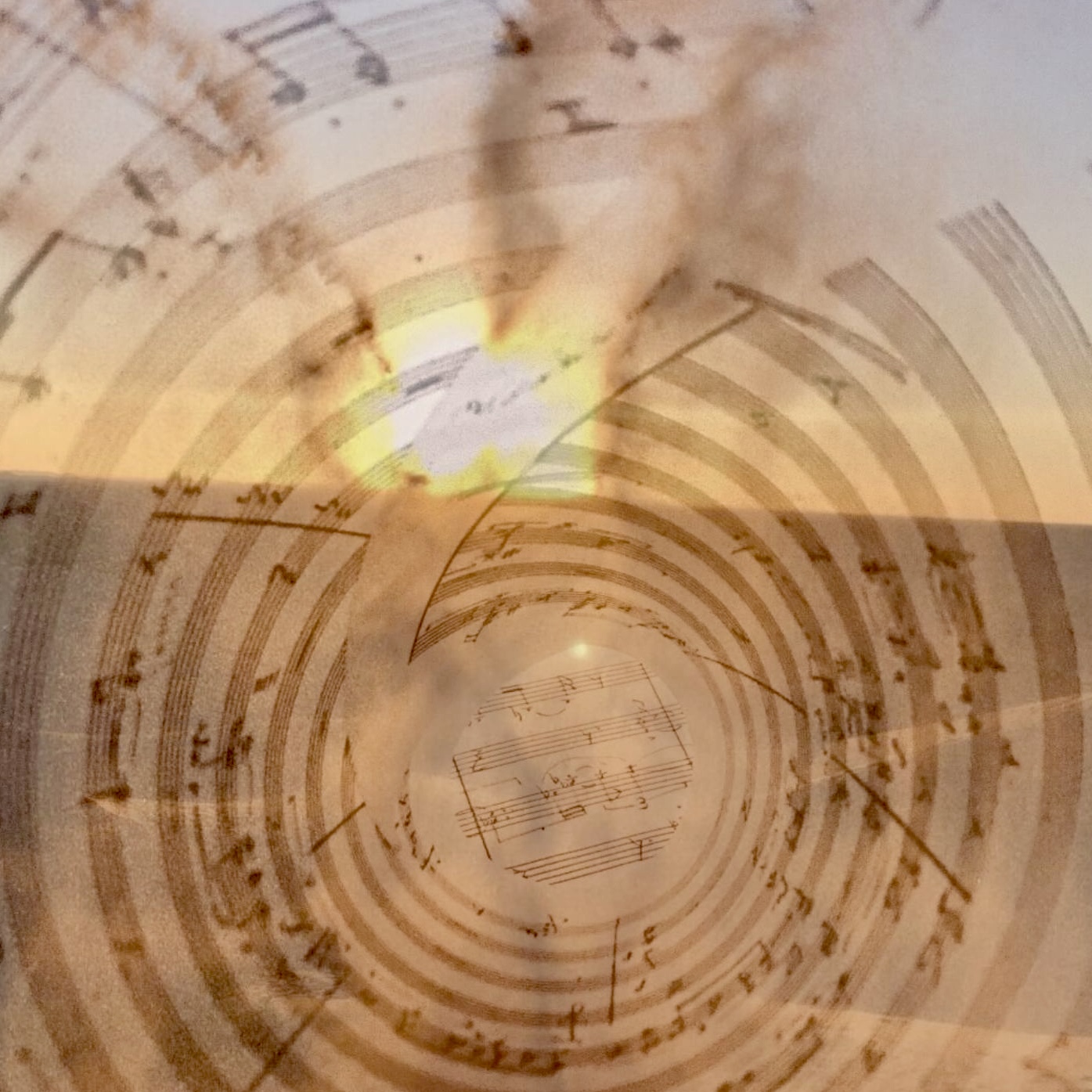
aeterneA is a compositional reinterpretation of Johannes Brahms’s “German Requiem.”
Premiered over 150 years ago, Brahms expressed his preoccupation with the transience of life, loss, and ultimately consolation. On the one hand, he draws on a concept of eternity that dates back far into the past:
that the transience of this world is transformed into something eternal. At the same time, he wanted to offer touching comfort to the bereaved—
his personal religious perspective with selected biblical texts.
Clara Schumann described Brahms’ work as “truly human,” that is, concerning all people.
How can a “German Requiem” sound in such a diverse, multidimensional society? Based on Brahms’ composition, it is further developed and reinterpreted in terms of sound and interreligious dialogue, against a backdrop of diverse cultural horizons and interreligious longing for peace through artistic-interreligious reflections from Islamic Sufism, West African syncretic musical traditions, and Jewish-Hebrew impulses.
aeterneA reflects on transience, loss, and consolation from past and present perspectives and seeks to open up space for coexistence in diversity.
composition • Johannes Brahms. Ilgın Ülkü. Udi Perlman. Yudania Gómez Heredia. Ehsan Ebrahimi. Maximilian Guth (nach Johannes Brahms)
concept. instrumentation • Maximilian Guth
polyLens vokal
asambura ensemble
conductor • Joss Reinicke
Premiere • 2024 in Lüneburg
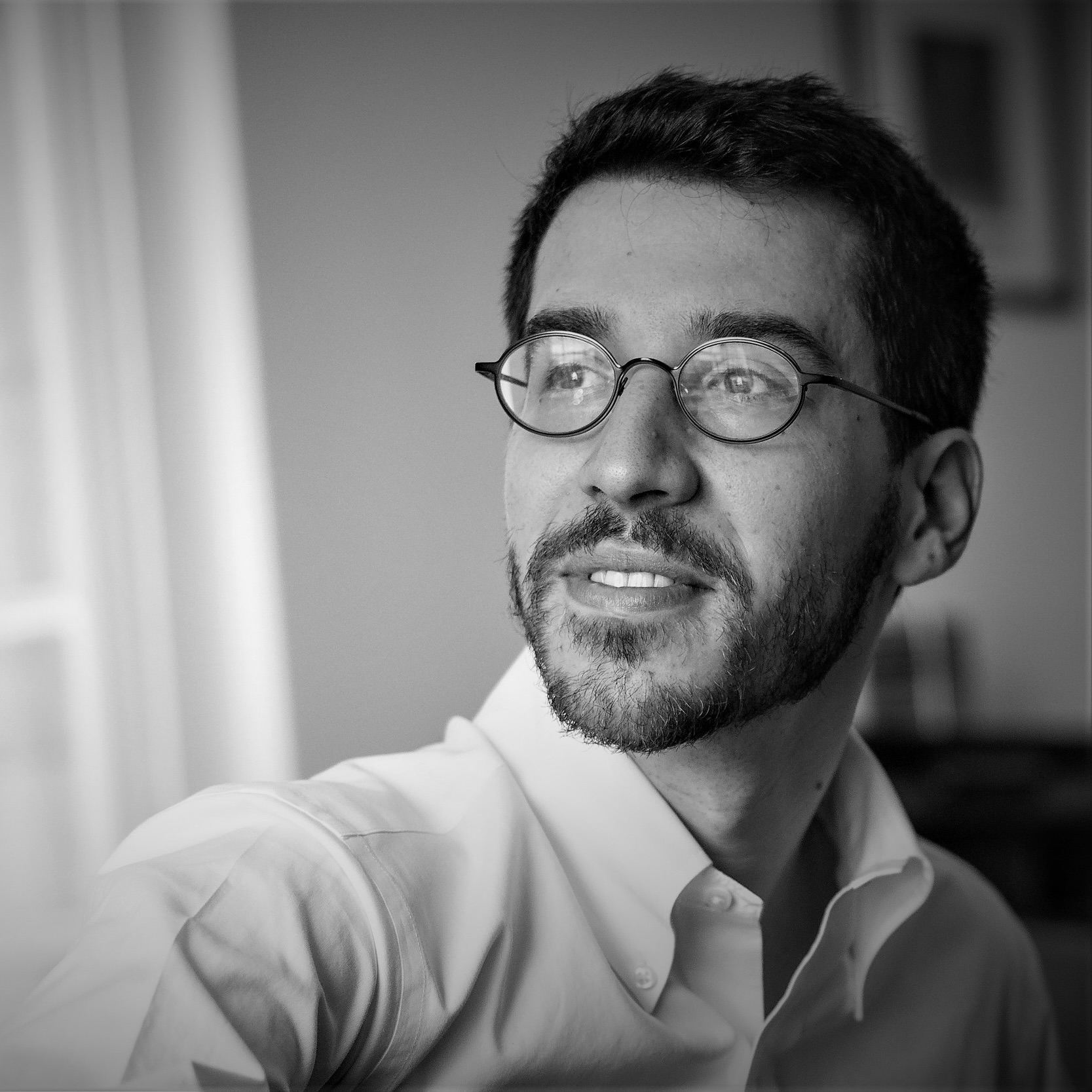
Udi Perlman highlights the connections to Jewish traditions in terms of sound and biography, based on the underlying texts, most of which are from the Old Testament and some of which will also be recited in Hebrew. A recurring theme in Brahms’ work is the concept of transience. In Jewish tradition, rituals can be seen as a means of dealing with the transitory nature of life. These rituals play a crucial role in resisting transience in existence. Thus, motifs from Brahms’ original work are fragmented and seemingly eternally interwoven with the sound, in polar dimensions between aeternae and perpetua as dimensions of eternity, between timeless calm and never-ending movement. Likewise, the polyphonic resonance of bell sounds is an inspiration for building interreligious bridges.

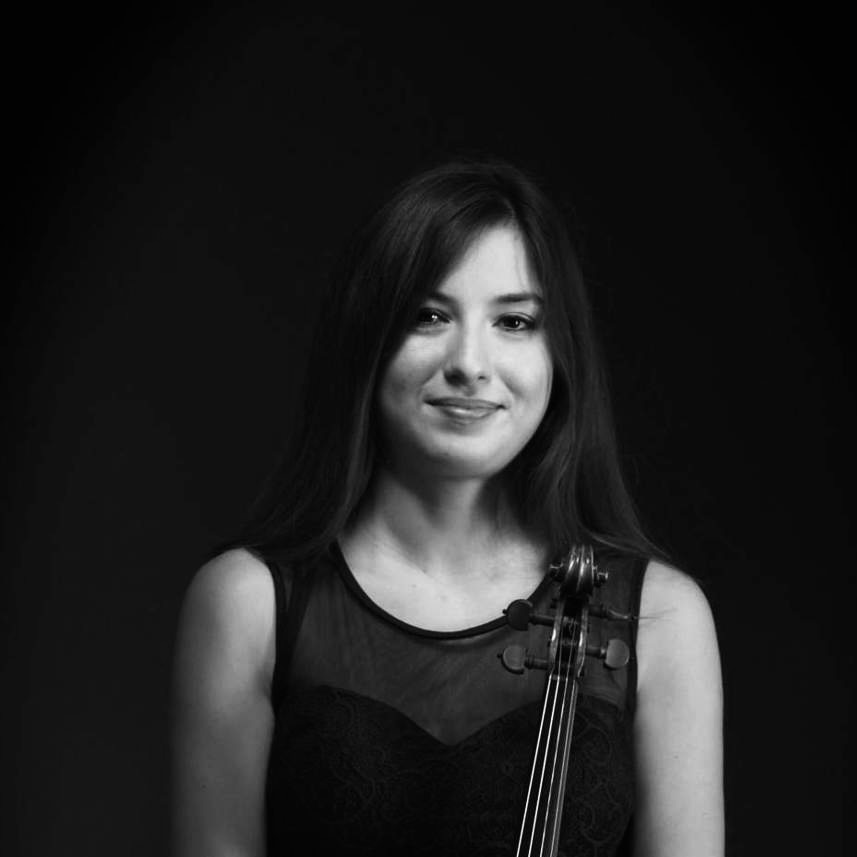
Yudania Gómez Heredia explores connections with her own Yoruba and Afro-Cuban traditions: The Yoruba religion, which originated in various West African regions such as parts of Nigeria and Benin, was exported to America through the slave trade and forms the basis for a number of traditions of the long-oppressed that are still practiced today in various parts of the Americas, including Brazil, Trinidad and Tobago, and Cuba. These traditions, mostly characterized by polyrhythmic structures, contain various forms of syncretism, in which traditional West African beliefs were fused with Christian elements. This combination led to the emergence of “Santería,” a practice that encompasses not only spiritual rituals, but also an interplay of sound, trance, social events, and contact with various minor deities who help determine people’s lives and interact with them on an ongoing basis.
Ilgın Ülküs’ compositions connect Brahms with the human journey from birth to death, inspired by Islamic Sufism. The music captures the perceptions of this journey through life, beginning with the unconscious curiosity at birth and ending with awareness in the face of death. Melodic maqam fragments and text passages from the Requiem create an atmospheric soundscape that gradually develops into circular rhythmic patterns. Text fragments from Islamic prayer traditions are recited at overlapping pitches, leading to a multilingual babble of voices. In addition, the soundscape collages traditional Sufi music in ney, santur, and oud..
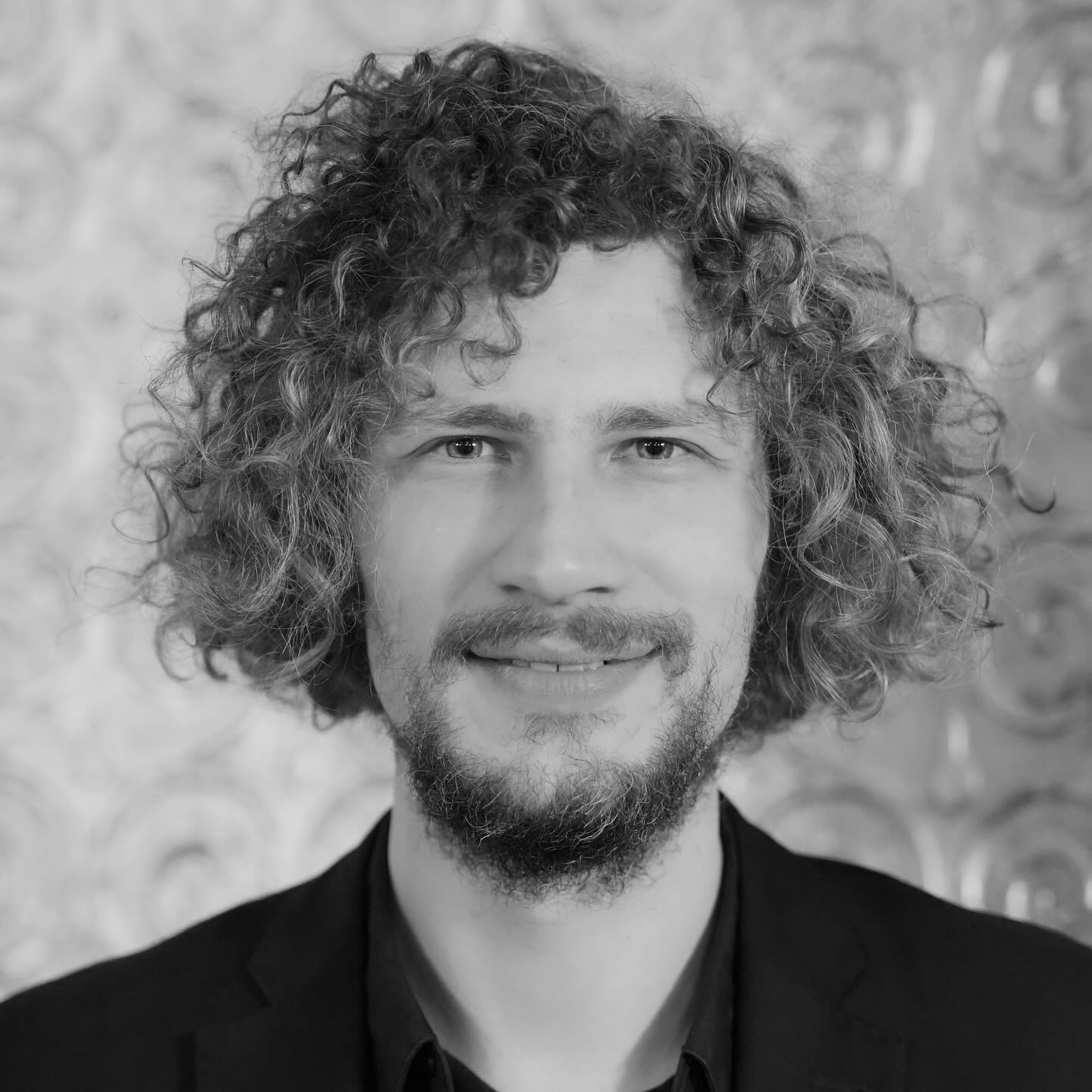
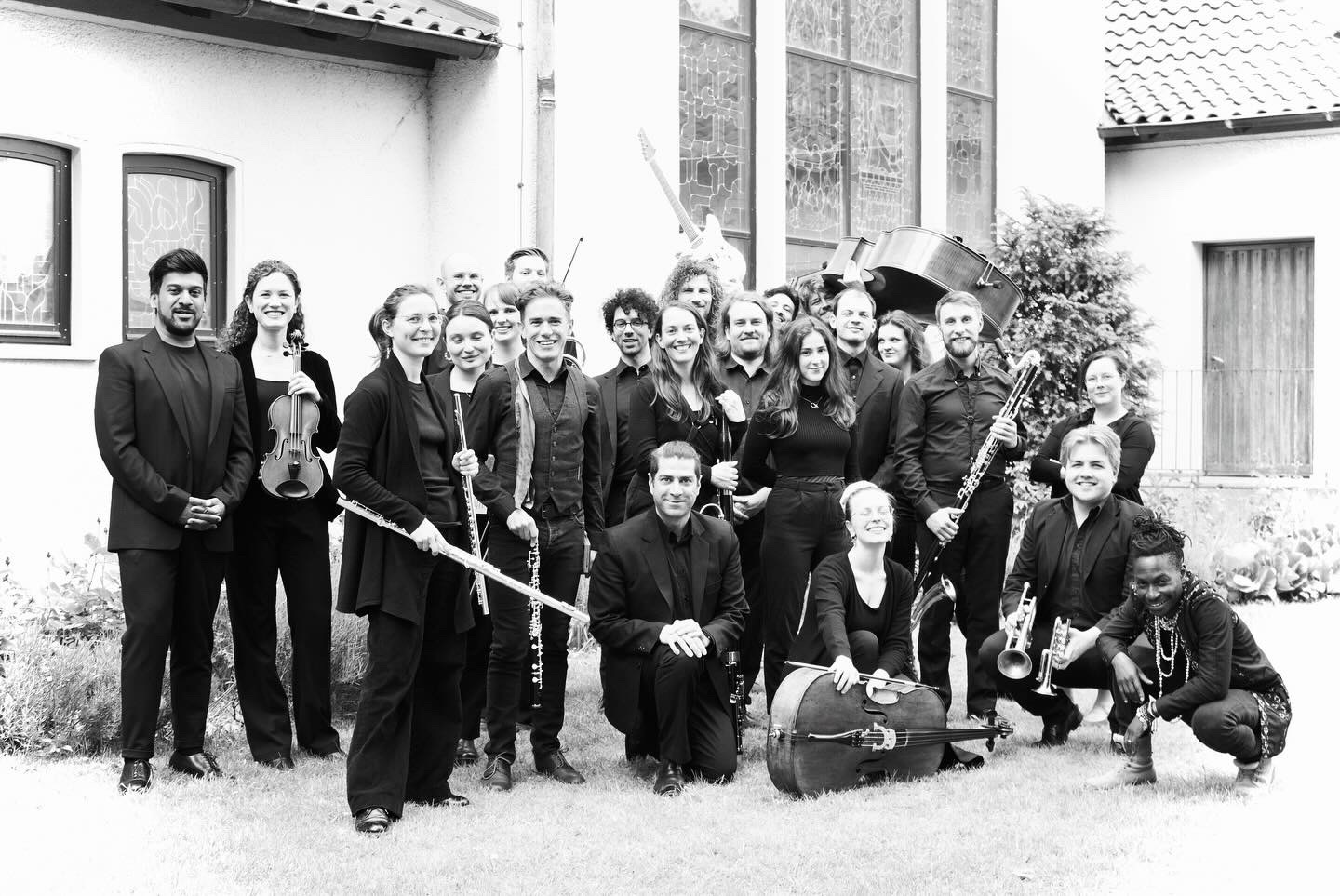
Maximilian Guth has reorchestrated Brahms’ Requiem for a chamber music ensemble, creating a colorful and characteristic asambura sound palette. Together with Ehsan Ebrahimi, he creates multidimensional sound cosmoses and seeks to open up space for coexistence in diversity. The polyphonic resonance of bell-like impulse sounds rich in overtones, multidimensional polyphonic recitations inspired by Jewish prayer at different speeds, and vibrating beats modeled on Islamic traditions become metaphors for building interreligious bridges..
► Programmheft
► weiterführende Gedanken:
komponieren als neu beleuchten
“The oratorio “aeterneA” stages an exciting new encounter with the German Requiem. It interweaves the original with newly composed pieces that draw on Brahms but also go their own way, for example by incorporating influences from Jewish, Turkish, and Afro-Cuban traditions. “aeterneA” opens up and expands the resonance of the music, including through instrumental colors from non-European cultures—thus taking Brahms at his word, who expressly did not want the message of his Requiem to be limited to “German,” but would have preferred to title it “Human” Requiem.”
Marcus Stäbler. music- and cultur journalist
“The last note fades away slowly into the dark autumn night. An uninterrupted fading away takes place, one that leaves behind all earthly things.
The concert—the premiere—was over.
After this prolonged fading away, an incredible silence prevails.
For a moment, there is—one hardly dares say the word—peace.
Was it time itself that was lost in a transcendental reinterpretation that evening?
Is it perhaps always the case that time is lost when art occurs?
It was art, and what art!
Music of the highest caliber, heard today in Lüneburg, in St. Johannis Church.
Brahms’ German Requiem in a new musical interpretation was on the program.
The magnificent subtitle:
AN INTERRELIGIOUS REQUIEM ABOUT ETERNITY FOR ALL PEOPLE BASED ON BRAHMS’ REQUIEM.
What Maximilian Guth has condensed here together with the asambura ensemble and all the participating musicians was great, truly great.
Approaching such familiar works in this way shows great inspiration, is timely, and leaves you wanting more. Listening to music like this encourages reflection on very big themes, inspires, shakes, and uplifts in equal measure.
And when music achieves this, and when it gives us a sense of interreligious humanity, then something has been accomplished that is of the utmost importance in these days.
Music for the world, in these incomprehensible days; as a necessary counterforce, as a force that inspires courage and peace — that is what this concert achieved.”Amadeus Templeton. Geschäftsführung TONALI
“The reinterpretation by the asambura ensemble shows how grateful we can be for this. What does it mean to be human today? What does music sound like that truly wants to be “human” today, that really wants to actively include everyone—while being fully aware of the unattainability of this goal? What does connectedness sound like, what does solidarity sound like? What do diversity, respect,
self-reflection, transculturality, transreligiosity, and transnationality sound like? This approach consistently develops the potential of this requiem: Brahms’ chosen idea of an eternity in which “we … are all transformed … and the dead are transformed” not only seeks to take away the horror of death, but first and foremost to remind us that no domination and no resulting inequality among people can and should exist. “For all flesh is as grass, and all the glory of man as the flower of the grass,” it says, ergo—fragile. “The grass withers and the flower falls.”
Hannah Schmidt. music journalist
“A tonal-compositional reinterpretation of Brahms’ Requiem and an implicit examination of death and the associated stages of mourning. Elements of Jewish-Hebrew, West African Yoruba, and Islamic Sufi backgrounds were unmistakable in the overall mosaic. With the participation of five young composers, a masterpiece without equal was created. Despite the rather chamber music-like instrumental ensemble (14 instrumentalists), the sound was surprisingly orchestral (and yet robust).
It was a performance that offered everything to captivate the audience for the entire 90 minutes.”
Mitsuaki Ueda. music journalist
“A very moving concert. The new musical context is fascinating. It allows the beauty of Brahms’ Requiem to shine even more brightly than in the original. The old and new musical and interreligious elements are artfully woven together into a compelling whole. For me, one of the musical highlights of the year!”
Wolfgang Reinbold.
Representative for Interreligious Dialogue of the Regional Church of Hanover.
Board of Directors, House of Religions
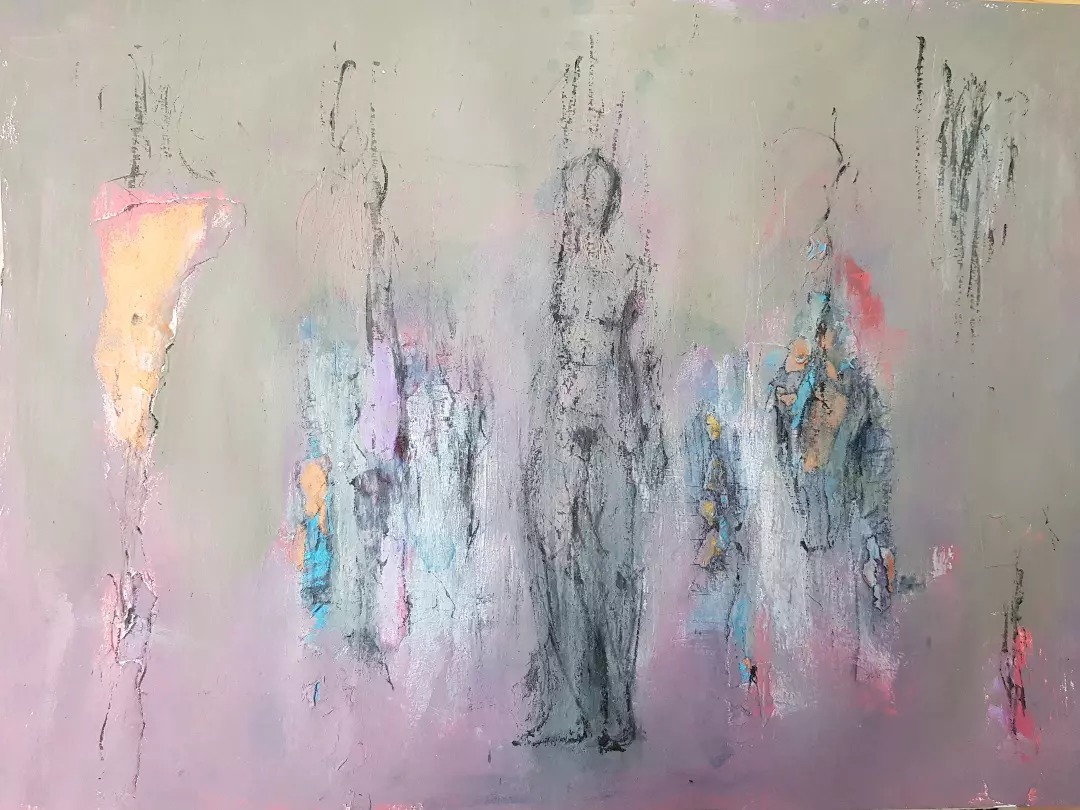 artwork • Boushra Moustafa